- Home
- >
- News
- >
- Industry News
- >
- Why does the inflatable rubber fender have poor waterproof effect?
Why does the inflatable rubber fender have poor waterproof effect?
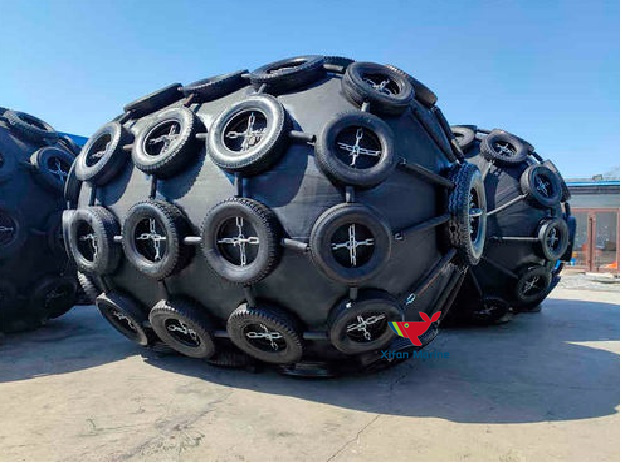
Inflatable rubber fenders are widely used due to their excellent waterproof performance. Why do inflatable rubber fenders have poor waterproof effects? How to solve it?
Material aging: Due to price competition, many manufacturers cut corners and reduce the performance of polyurethane materials, leading to waterproof failure. Solution: To purchase polyurethane materials, you must choose a reputable manufacturer and confirm the relevant certificates and production dates.
2. The substrate contains moisture: Polyurethane, a material used to manufacture inflatable rubber fenders, contains both water and oil. Check if the substrate is dry before construction. If it is an oily material, water will be trapped inside, and the waterproof layer may peel off after sunlight is converted into steam. Solution: First, confirm whether it is oil-based polyurethane or water-based polyurethane. If it is oil-based polyurethane, ensure that the base surface is dry before construction.
3. Bottom layer not cleaned: Before waterproofing construction, the bottom layer should be cleaned. If there is dust or other substances, the adhesion between the waterproof layer and the bottom layer will be relatively weak, which may lead to the risk of leakage. Solution: During construction, the bottom layer should be clean and flat, without floating ash and oil stains.
4. The waterproof layer is too thin: The waterproof layer must reach a certain thickness to be effective. Due to the low water absorption of polyurethane materials, if the waterproof layer is not thick enough, water will pass through the polyurethane waterproof layer and reach the bottom. After being exposed to sunlight, water vapor will be generated at the bottom, and then the waterproof layer will peel off. Solution: Ensure coating thickness and frequency, and reinforce the four corners with fiber mesh.
Waterproof projects with less than: construction experience should be carried out by professional construction teams. Before construction, the possible causes of leakage should be carefully predicted. Solution: It is necessary to entrust a professional construction team, and the construction quality will directly affect the final effect.
With the development of the inflatable rubber fender industry, rubber components are also developing rapidly, and the production materials are showing diversified characteristics and widely used. The hardness of inflatable rubber fenders is one of the objectives of quality control.
Hardness is one of the basic physical properties of vulcanized rubber. Hardness is one of the basic physical properties of vulcanized rubber (the raw material for marine rubber fenders). The hardness of rubber is closely related to physical properties such as tensile stress, tear strength, elasticity, and compressive permanent deformation. Hardness testing has the characteristics of simple operation, low cost, and non-destructive testing, and is widely used in quality monitoring. Hardness can easily indicate the vulcanization effect and uniformity of a series of rubber products, and is also suitable for traceability diagnosis of rubber material aging, pollution, micropores, and other issues.
2. Types of rubber hardness. There are many types of rubber hardness, which can be divided into spring hardness and constant load hardness based on the principle of applied load. A spring hardness tester is used to take readings within a specified time after applying a certain load. It has the characteristics of simple structure, easy operation, and portability, and is suitable for production workshops and external inspections. The indenter of the constant load hardness tester is spherical, and a certain mass of counterweight is applied to the load. The depth at which the indenter enters the rubber sample represents hardness, measured in IRHD.
3. Constant load hardness. IRHD is a widely used rubber hardness unit internationally in recent years. Pressing the spring hardness indenter into the rubber surface usually leaves a permanent indentation. The hardness measurement method under constant load has the characteristic of not damaging the rubber surface. In addition, constant load hardness has the characteristics of high accuracy, good stability, and wide measurement range.