
- Home >
- Marine D Shackle: Reliable Connecting Hardware for Ships and Offshore Applications
Marine D Shackle: Reliable Connecting Hardware for Ships and Offshore Applications
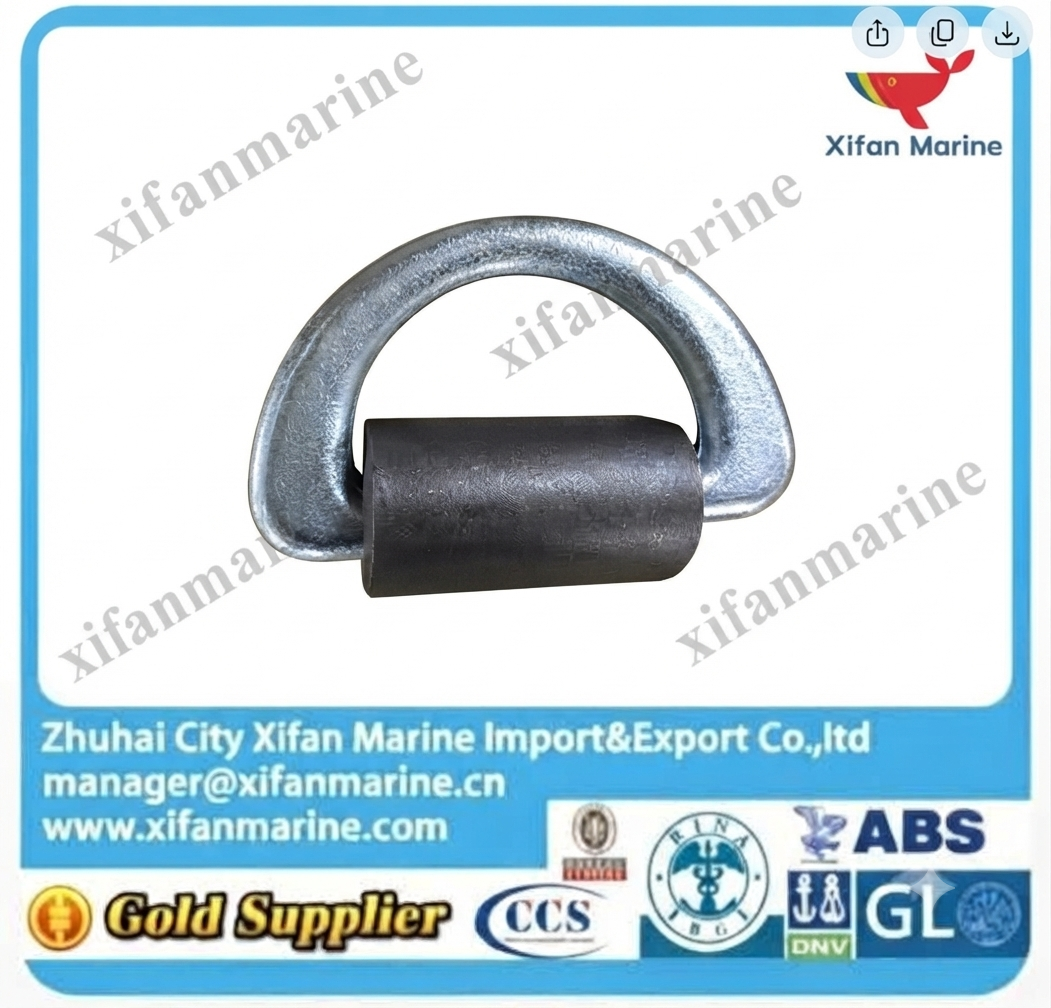
As the global shipping and offshore industries continue to develop, reliable marine hardware has become increasingly important for safe and efficient vessel operations. Among various types of connecting hardware, the D Shackle is widely used for securing, connecting, lifting, mooring, rigging, and other marine applications.
Although a D Shackle may appear to be a relatively simple component, its performance directly affects the safety and reliability of connected equipment. Unlike ordinary hardware used in general applications, marine shackles must withstand demanding conditions involving heavy loads, vibration, humidity, salt spray, corrosion, and continuous outdoor exposure.
For this reason, professional Marine D Shackles are specifically designed and manufactured according to the requirements of marine, offshore, lifting, and rigging applications.
The Core Features and Requirements of Marine D Shackles Fall Into Four Critical Dimensions:
First, Strong Structural Design and Load-Bearing Performance
A D Shackle is primarily used to create a secure connection between ropes, chains, slings, lifting equipment, and other marine hardware.
During actual marine operations, shackles may be exposed to significant tensile forces, dynamic loads, vibration, and changes in loading direction. An inadequately designed or incorrectly selected shackle may result in deformation, loosening, or even connection failure.
Professional D Shackles are therefore manufactured with carefully controlled dimensions and structural strength to provide reliable load-bearing performance.
The shackle body and pin must work together as an integrated connection system. Proper material selection, forging or manufacturing processes, dimensional accuracy, and surface quality all contribute to the overall strength and service reliability of the product.
For marine operators, selecting a D Shackle with an appropriate Working Load Limit (WLL) is particularly important. The rated capacity should always be matched to the actual application and working conditions.
This combination of structural strength and appropriate load selection makes the D Shackle an important component of safe marine connection systems.
Second, Reliable Pin and Connection Design
The pin is one of the most important components of a D Shackle because it determines how securely the connection is assembled and maintained during operation.
Depending on the application, marine shackles may use different pin configurations designed to meet specific installation, loading, and operational requirements.
The pin must provide a secure connection while also allowing convenient installation and removal when maintenance or equipment replacement is required.
For applications involving lifting, mooring, rigging, or deck equipment, the connection should be properly secured before operation. Operators should also check the pin, shackle body, threads, and contact areas regularly for signs of wear, deformation, corrosion, or damage.
A properly designed and maintained connection helps reduce the risk of accidental disengagement and contributes to safer marine operations.
Third, High Corrosion Resistance for Marine Environments
The marine environment presents another major challenge: saltwater, humidity, moisture, and corrosive atmospheric conditions.
Long-term exposure to seawater and salt-laden air can accelerate corrosion of metal components. Surface corrosion can gradually reduce material thickness and potentially affect the mechanical performance of marine hardware.
Professional Marine D Shackles therefore commonly use materials and surface treatments selected according to the intended application and environmental conditions.
Depending on the product specification, shackles may be manufactured from suitable high-strength steel, stainless steel, or other corrosion-resistant materials. Surface treatments may also be applied to improve durability and protection against environmental exposure.
For marine operators, material selection is not simply an aesthetic consideration. The combination of material strength, corrosion resistance, surface treatment, manufacturing quality, and maintenance requirements all contribute to the long-term reliability of the D Shackle.
Fourth, Strict Quality Control and Marine Application Requirements
Safety is one of the most important considerations when selecting connecting hardware for ships, offshore platforms, lifting operations, and other demanding applications.
A D Shackle may serve as a critical connection point within a larger lifting, mooring, or rigging system. Any failure of the connecting hardware could affect the safety of personnel, equipment, and vessel operations.
For this reason, professional marine shackles should be manufactured under strict quality-control procedures. Important considerations may include material traceability, dimensional inspection, load testing, surface inspection, marking, and applicable certification requirements.
Depending on the project and application, customers may also require products to comply with relevant international standards, marine specifications, lifting requirements, or classification society requirements.
For shipyards, shipowners, offshore contractors, and marine equipment suppliers, confirming the required Working Load Limit, material specification, dimensions, certification, and application conditions at the project planning stage is essential for selecting the appropriate D Shackle.


