- Home
- >
- News
- >
- Industry News
- >
- Why can an anchor stop a hundred ton ship? How long is the anchor chain?
Why can an anchor stop a hundred ton ship? How long is the anchor chain?
What exactly is an anchor? In fact, this anchor usually refers to the heavy object that fixes the ship. In ancient times, anchors were very simple, basically a wooden basket that could hold a lot of stones. Such equipment is also called "anchor".
By taking apart the word 'ding', one can better understand its working principle: stabilizing with stones. Stone anchors were used for a long time until the Southern Dynasties when records of metal anchors appeared in China.
Most modern anchors are made of metal and come in various shapes, but they can perfectly fulfill their job responsibilities by firmly tying the ship to the port. What is the wonderful principle behind this?
The working principle of a boat anchor is actually very simple. We can imagine the boat anchor as a wooden stake that ties a horse or a person flying a kite. The task of an anchor is to securely hold the ship in place so that it does not easily drift away. Different ships are suitable for different anchors. Today, we will take you to learn about the four common modern anchors and their working principles.
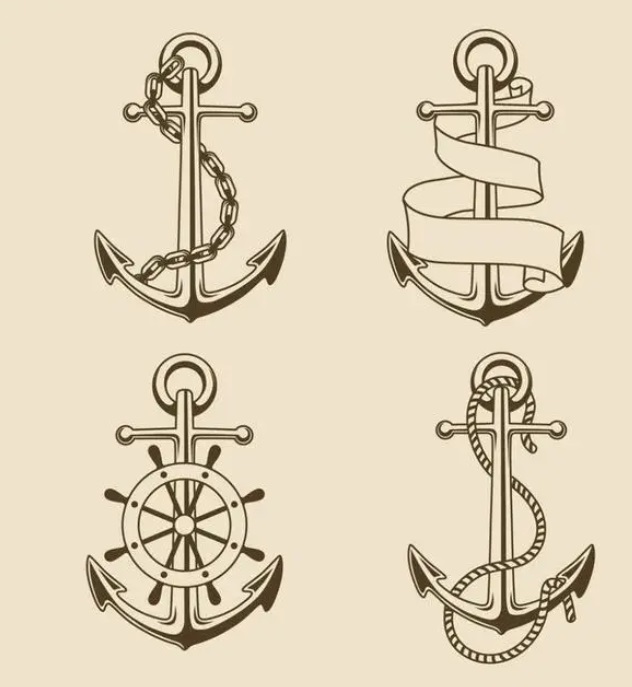
The first type is a rod anchor, which we all know is generally divided into two parts: anchor claws and anchor shafts. The anchor claw and anchor stem of a rod anchor are a whole, and there is usually a horizontal bar perpendicular to the anchor claw.
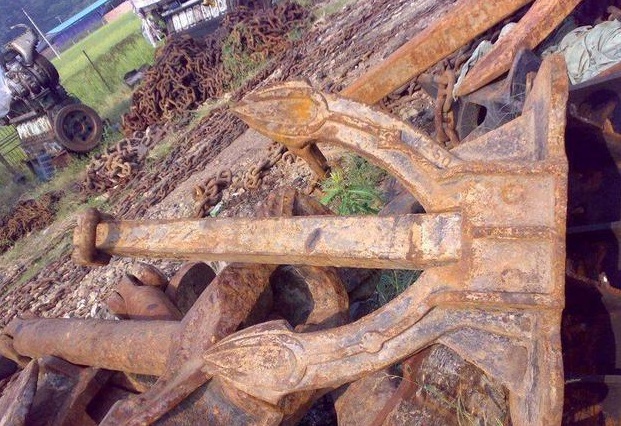
The most famous anchor is probably the navy anchor. Its working principle is to embed one end of the anchor claw into the sand and stones at the bottom of the water, and then pull the anchor chain to a suitable angle, so that the hull is subjected to tension, and the force given by the hull to the anchor can be applied to help the anchor fix better.
Anchoring with a rod anchor is also very simple. Simply adjust the position of the ship to be perpendicular to the anchor chain and anchor body, and the anchor can be easily retracted. However, rod anchors are not suitable for large ships because they have a horizontal bar. If the anchor volume is too large, it is difficult to retract, so large ships generally do not use rod anchors.
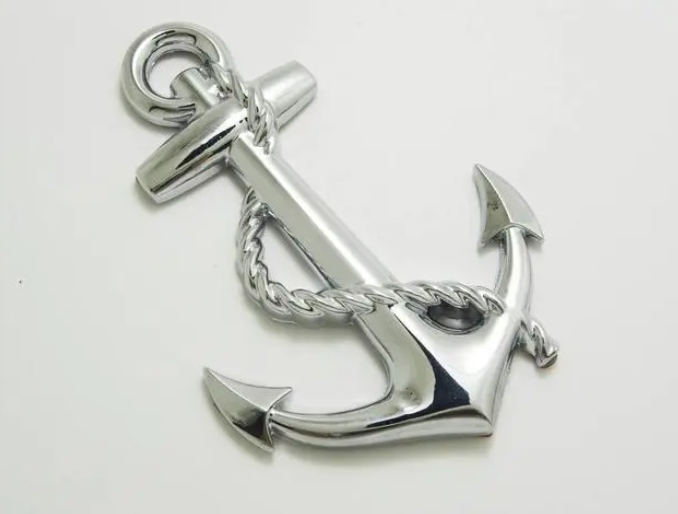
The second type is the rodless anchor. As the name suggests, the most obvious difference between a rodless anchor and a rodless anchor is a horizontal bar, while a rodless anchor does not have a horizontal bar. In terms of use, rodless anchors are quite different from rod anchors. The anchor claws and anchor shafts of rodless anchors can rotate, allowing them to face the terrain and find a more suitable angle.
A rodless anchor is not like a pole anchor, which only works with one end of the anchor claw. When in use, both of its anchor claws will be inserted into the bottom of the water. The rodless anchor is also the most common type of anchor, which is easy to use and efficient, making it a good partner for sailing at sea.
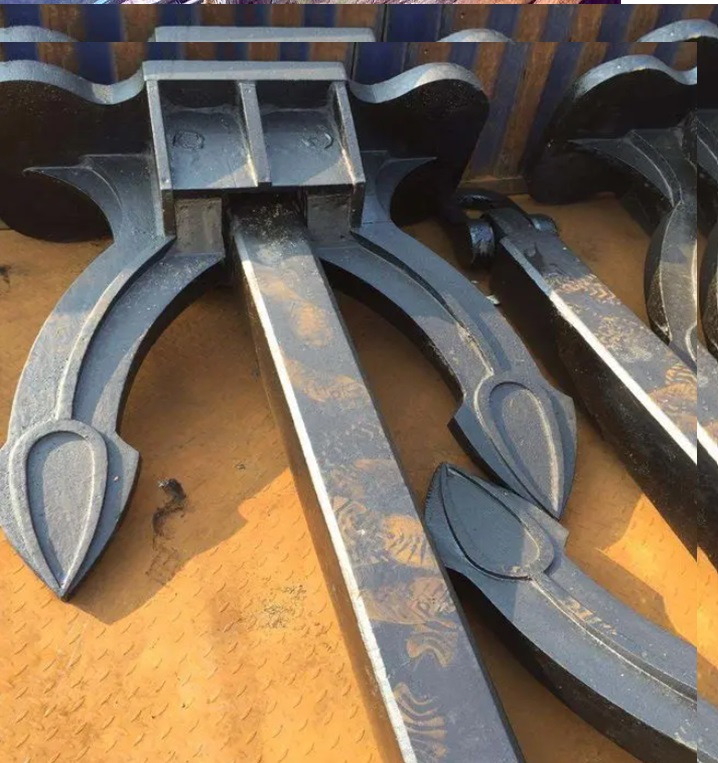
The third type is the large grip anchor used to secure large ships, which has huge claws that can rotate and better embed into the soft soil of the water bottom. The huge anchor claws also provide it with a larger area to gnaw on soil, so the gripping power of the high grip anchor is naturally very huge.
Its grip is twice as strong as other anchors of the same weight and material, making it an effective anchor for securing large ships. Its anchor head and claws have protruding rods in between, allowing it to withstand greater tension and adapt to more terrain.
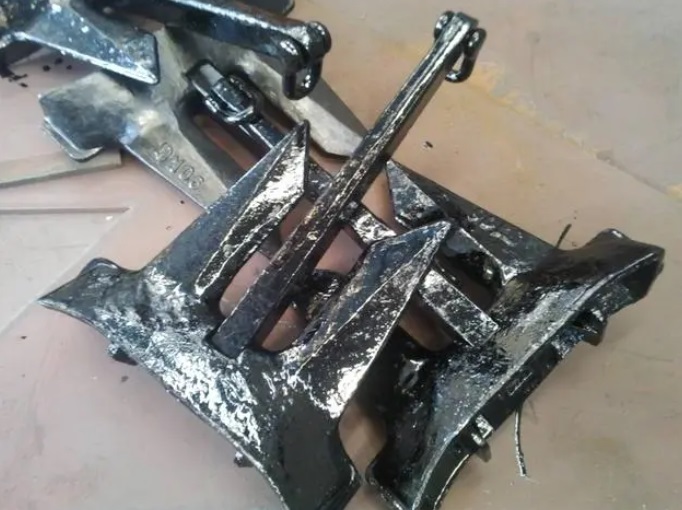
The fourth type of anchor is relatively rare, it is a special anchor. This type of anchor does not have a fixed shape. Mushroom shaped anchors and umbrella shaped anchors are branches of special anchors. As the name suggests, special anchors are anchors that respond to different terrains and environments.
This type of anchor is relatively difficult to move and is generally used to secure objects used for water positioning, such as light boats and floats. So special anchors are basically not used by ships that operate year-round, they only serve as anchors and emit light and heat in other fields.
What is a ship chain ?
After discussing the different types of ship anchors, let's take a look at ship chains. After all, ship chains are the link between ships and anchors, and they are also quite important. Most of the ship chains in our impression are just iron chains, but chains that can hold ships of several tons or even tens of tons are naturally not vulgar.
The length of a ship chain is 27.5 meters, and a whole ship chain is naturally composed of many ship chains. Calculated, the most common length of a complete ship chain is about 340 meters, which is the sum of twelve to thirteen ship chains added together.

At the connection between ship chains, there is usually a shackle as a connection, which is also known as a chain link. Sailors sailing on the sea usually color the chain link, so that they can check how many ship chains have been launched on the water. The last few sections of the chain link will be sprayed with eye-catching colors to serve as a warning.
Because if the ship does not complete deceleration after all the ship chains have entered the water and the ship anchors have been fixed, the strong pulling force may break the ship chains or damage the ship anchors, and the ship itself may lose stability, causing a navigation accident. This consequence is quite frightening, so spare ship chains can often be seen on large ships to prevent situations where the ship chains are too short.