- Home
- >
- News
- >
- Industry News
- >
- How to deal with the oscillation impact of large ships with rubber fenders ?
How to deal with the oscillation impact of large ships with rubber fenders ?
Rubber fenders, as a commonly used equipment for ship berthing, mainly serve to provide cushioning and protection between the ship and the dock. In the case of oscillatory impact, rubber fenders require a series of design and installation measures to ensure their normal use and durability.
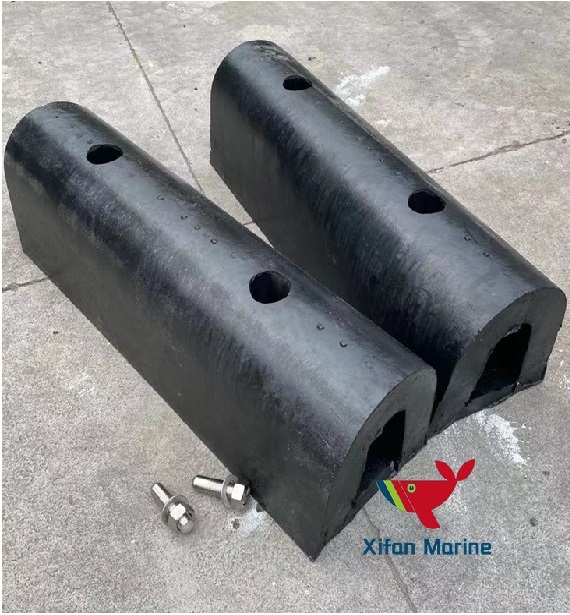
Firstly, the material selection of rubber fenders is very important. Rubber fenders need to have good elasticity and impact resistance to effectively absorb and reduce the impact force generated during ship berthing. Common rubber materials include natural rubber, synthetic rubber, and chloroprene rubber. Among them, chloroprene rubber is widely used in the manufacturing of rubber fenders due to its excellent weather resistance and wear resistance.
Secondly, the structural design of rubber fenders is also crucial. Generally speaking, rubber fenders are mainly composed of rubber blocks and steel wire ropes. The shape of rubber blocks can be designed according to different usage environments, including rectangular, circular, and D-shaped shapes. In addition, an air bag or foam filler can be arranged inside the rubber block to increase its energy absorption capacity. At the connection between the rubber block and the steel wire rope, it is often fixed by bolts or welding to ensure that it will not fall off or break under oscillation and impact.
In addition, in order to cope with the oscillation impact of large ships, the installation of rubber fenders needs to pay attention to the following aspects. Firstly, the position and arrangement of the fenders are usually determined based on the size and type of the vessel. Next is the assembly and fixation of fenders. Rubber fenders need to be firmly connected to the structure of the dock or ship to ensure that they will not loosen or fall off during use. It is the reserved clearance and pressure limit of the fender. Rubber fenders need to have a certain clearance and pressure margin during installation to cope with the oscillation impact generated by different ship sizes and berthing states.
In addition to the above design and installation measures, rubber fenders can also adopt some other coping strategies in dealing with the oscillation and impact of large ships. For example, a layer of anti-corrosion paint or coating can be applied to the surface of rubber fenders to increase their weather resistance and wear resistance. In addition, lining or adding fillers can be installed inside the rubber fender to enhance its energy absorption capacity and impact resistance. Additional accessories and auxiliary facilities can also be installed, such as buffer stations, fender ropes, and warning signs, to further ensure the safety and reliability of rubber fenders.
In short, rubber fenders need to ensure their normal use and durability through appropriate material selection, structural design, and installation methods when dealing with the oscillation impact of large ships. At the same time, other coping strategies can be adopted to further enhance its energy absorption capacity and impact resistance. Through reasonable design and installation, rubber fenders can effectively alleviate and reduce the oscillation impact during ship berthing, thereby protecting the safety of the hull and dock.
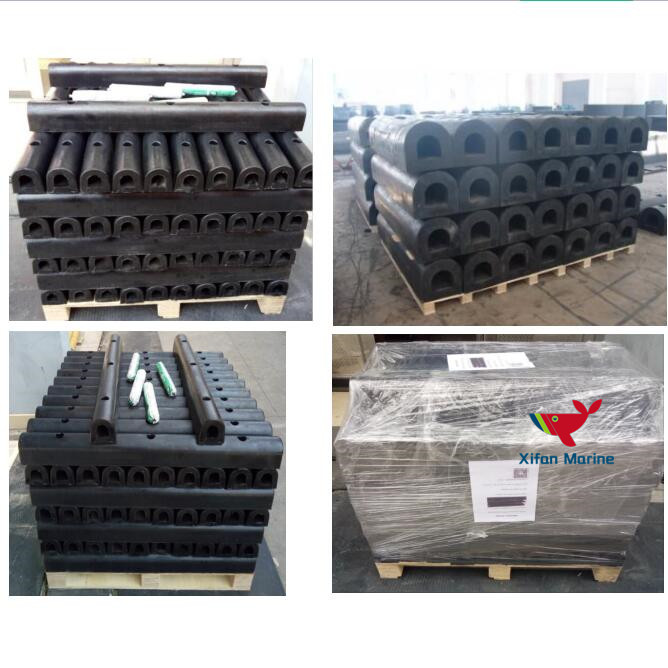
Xifan marine rubber fender are manufacture with high quality raw materials,a wide range of rubber fender are available,like cell fenders, cone fenders,arch fenders,cylindrical fenders,pneumatic fender etc, please feel free to contact us at any time.