- Home
- >
- News
- >
- Industry News
- >
- How many times is the safety system of the anchor chain accessory release buckle?
How many times is the safety system of the anchor chain accessory release buckle?
The safety factor of the anchor chain accessory shackle is calculated by dividing the ultimate working load by the rated working load. The ultimate working load is the maximum load that the product itself can withstand, and the rated working load is the maximum load that the product is allowed to load during normal use. The safety factor is usually expressed in the form of a ratio, such as 5:1. In theory, the minimum deformation coefficient of anchor chain accessory release products is 2.2:1, and the minimum fracture coefficient of anchor chain accessory release products is 4:1.
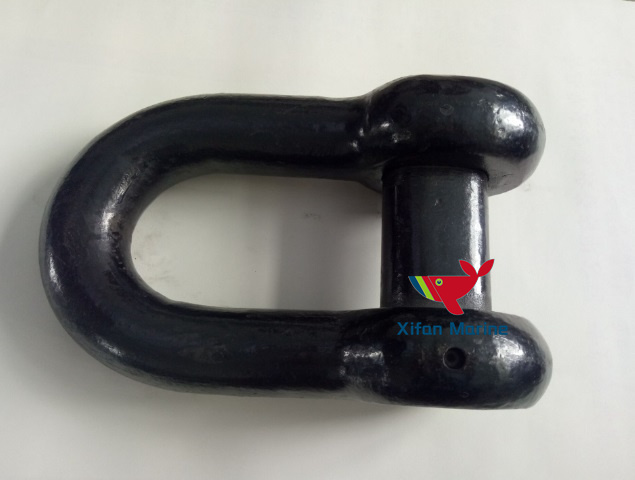
Steps for Safety Inspection of Anchor Chain Attachment Unloading Buckle :
One of the common rigging devices, the "anchor chain accessory shackle", is the most commonly used in lifting machinery. It generally serves a connecting function, such as the steel wire rope buckle and the lifting ear cannot be directly connected, but can be connected through the anchor chain accessory shackle. It is mainly divided into bow shaped anchor chain accessory shackle and D-type anchor chain accessory shackle in terms of shape. Due to its great importance, a safety inspection needs to be carried out before each use. The following are several steps for the safety inspection of anchor chain accessory shackle.
Step 1: Inspection before installation and use. The anchor chain accessory shackle should be certified by the manufacturer's inspection certificate. Otherwise, the anchor chain accessory shackle should undergo material chemical composition inspection and necessary mechanical performance tests (such as tensile and impact tests).
Step 2, Surface Inspection: Check the surface condition of the anchor chain accessory shackle by visual inspection and touch. The surface of the anchor chain accessory shackle in use should be smooth, free of burrs, sharp angles, and should not have defects such as cracks, folds, or overburning.
Step three, internal defect inspection. If necessary, internal flaw detection should be carried out, mainly through non-destructive testing equipment to check the internal condition of the anchor chain accessory shackle. There should be no internal cracks, white spots, or any debris that affects the safety of use.
Step four, safety devices. If conditions permit, safety devices should be installed to prevent the lifting object from accidentally falling off.
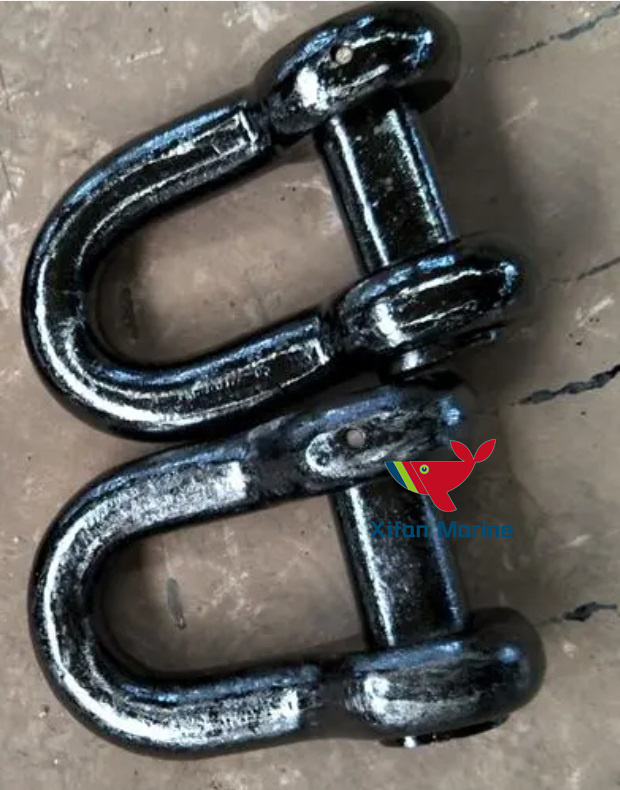
Technical standard for safety work of anchor chain accessory unhooking :
Anchor chain accessory shackle is a type of sling tool. If classified by shape, anchor chain accessory shackle is widely used in the field of lifting machinery equipment due to its small size and high load-bearing capacity. To ensure the safety and reliability of anchor chain accessory shackles, the following specific technical requirements should be met:
It should be ensured that the surface of the anchor chain accessory release buckle is smooth and flat, and there should be no serious defects such as cracks or overburning. The raw materials for the unloading of anchor chain accessories used for lifting cannot be cast iron or steel. Attention should be paid to the maintenance of the anchor chain accessory unloading, and drilling holes should not be done on the anchor chain accessory unloading. It is not allowed to use welding repair and other methods for cyclic reuse in case of defects such as cracks. If the buckle body or shaft pin of the anchor chain accessory is permanently deformed or damaged to the scrap standard, it should be replaced in a timely manner.
Xifan Marine supply wholesale marine parts and accessories,marine boats suplies for sale,kinds of new ships,etc.We promise you high quality marine equipment and reasonable price,you can trust us among the marine equipment manufacturers in China.