- Home
- >
- News
- >
- Industry News
- >
- Learn about repair methods for marine airbags
Learn about repair methods for marine airbags
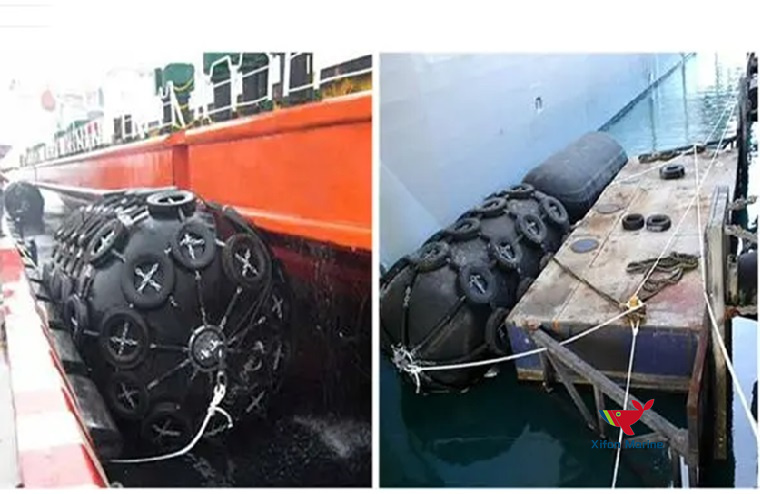
Marine airbags may be punctured, punctured, scratched, and worn during use. If they cannot be used normally due to air leakage, they need to be repaired. So, let's learn about the repair methods for marine airbags together!
Air leaks out from the airbag opening
The reason for this situation with marine airbags is mostly due to damaged air brakes, which can be replaced. Air leakage at the airbag mouth and flange edge is often caused by excessive compression or collision, and is generally repaired using cold spraying and rubber pad methods.
Cold bonding method: Remove the flange, polish the leaking area (using gauze, etc.), clean it up, apply glue, cut off a rubber plate of appropriate size (such as car pipelines, etc.), polish and paste it clean, fix the flange and tighten it
Raw rubber pad method: Prepare a 20mm thick rubber sheet. Raw rubber plates are generally made of rubber materials with similar physical properties to car tires. Remove the airbag flange, clean up the leaking area, and cut it into a suitable size to block the leaking area. Then cut a rubber plate of the same size as the flange, and according to the size of the airbag flange screws, dig holes in the area and stick it on the airbag. Cover the flange and tighten it.
Airbag leakage
The maintenance of marine airbags often involves holes formed by collisions or contact with sharp objects during use, and generally uses two methods: cold bonding and hot patching.
Cold bonding method: Prepare elastic rubber sheets such as car pipelines, polish them clean, and treat damaged and leaking areas accordingly. Apply high-strength, water-resistant adhesive and compact it.
Heat repair method: generally suitable for situations with large incisions. If the incision is below 80mm, it can be repaired on site.
Materials need to be prepared for repairing marine airbags
Ship airbag maintenance involves breaking 50 grams of toluene (which can also be replaced with clean gasoline) and 8 grams of raw rubber sheet into a paste. Unsulfided nylon window cloth (can be obtained from rubber factories or airbag manufacturers to make various automotive tire fabrics), three pieces measuring 50cm in length and 15cm in width, purchased with toluene (or gasoline) and laminated for bonding. Vulcanized iron plate (50cm long, 15cm wide, 2-3cm thick).
Paste: Find a place to support the jack. The pressure per square centimeter of the vulcanized plate is 8-16kg (for a length of 50cm and a width of 15cm, a pressure of 6 to 12 tons is required). Pull out the airbag that needs to be repaired, flatten, polish, and evenly apply glue to the repaired area. Apply three layers of cloth or paper on top, evenly heat the iron plate, and stop heating with a thermometer until it reaches 160. At this point, the temperature of the iron plate continues to rise until it drops to 170. Before lowering the 2cm iron plate to 175, press it onto the airbag with the material already laid, and the repair material should not exceed the area of the iron plate.