- Home
- >
- News
- >
- Industry News
- >
- Is it better to have stronger mooring ropes and connecting shackles?
Is it better to have stronger mooring ropes and connecting shackles?
The safety of mooring ropes has always been an important issue in the shipping industry. The use of high-strength mooring ropes, rope tails, and shackles can reduce peak loads and enhance mooring safety. However, the strength of mooring ropes and connecting shackles is not necessarily the greater the safety, and non-standard strength equipment can easily cause safety threats and economic losses.
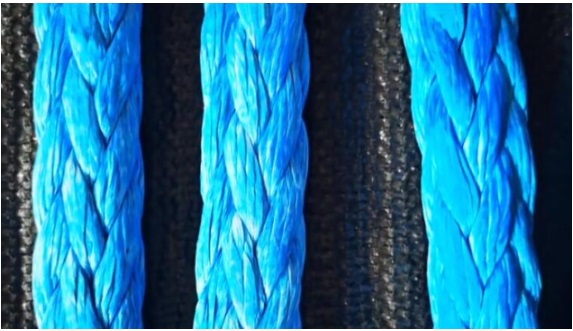
When selecting cables, the design breaking force of the cables should be 100% -105% of the vessel's design MBL;
The WLL of steel wire ropes is 55% of the ship's designed MBL, while the WLL of all other synthetic fiber ropes is 50% of the ship's designed MBL;
The design breaking force of the tail rope needs to be higher than the design breaking force of the cable, which should be 125% -130% of the ship's design MBL;
The length of the steel wire rope tail is required to be between 11 and 22 meters;
The sliding force of the cable car must be tested at 60% of the minimum breaking force designed for the cable car;
The safe working load of the connecting shackle must be equal to or greater than the maximum working load of the cable;
For the use of Tonsberg type shackles, the cable tail must be connected to it; For the use of "Mandal" type shackles, the steel wire cable must be connected to it.
Detailed explanation of the equipped values of mooring equipment
Brake Holding Capacity (BHC) is a design that calibrates the braking capacity of a winch. The BHC value provides important reference for the minimum breaking load (MBL) and brake sliding force (RF) test values equipped with cables. The safety requirements are: RF<BHC<MBL. The minimum breaking force of the cable must be greater than the braking force of the winch, otherwise the cable is easily pulled apart; The sliding force of the winch brake should be less than the braking force of the winch, otherwise the cable will pull and damage the winch.
The minimum cable breaking force (DMBL) relationship for winch design is equipped with cable design breaking force, which is an important basis for equipping the release buckle and cable tail.
The difference between the maximum working load of the cable (WLL) and the cable breaking force (LDBF) is that when the external force reaches the maximum working load, it will cause structural tension or destructive damage to the cable, thereby affecting the cable breaking force, but will not break the cable.
The winch sliding force (RF) usually requires annual testing and recalibration of the braking point at which the cable slides out. In practical applications, if the LDBF equipped with cables is 100% to 105% DMBL, then the RF value can be 60% of the LDBF equipped with cables.
If the LDBF value is too much higher than the DMBL, the "brake slip force" should be tested and calibrated according to the value of RF=DMBL × 60%, and 60% of the cable breaking force should not be used. Risk assessment must be conducted during use, including RF not exceeding BHC and cable diameter not affecting drum storage.
Only by correctly selecting and standardizing the use of mooring lines, connecting shackles, cable tails, and other mooring devices, can external inspections of ships be efficiently conducted through ports, reducing losses, and improving mooring systems to promote further safe development of the shipping industry.
Xifan Marine supply wholesale marine parts and accessories,marine boats suplies for sale,kinds of new ships,etc.We promise you high quality marine equipment and reasonable price,you can trust us among the marine equipment manufacturers in China.